Still a Work in Progress: The Case for Loving Your Half-Finished Home Right Now
Let me paint you a picture. Not literally — because if you're anything like me, there's already a half-painted wall in your living room that's been "almost done" for four months.
You've got a gallery wall with three frames on it and a pencil outline where six more are supposed to go. The kitchen has new cabinet hardware on every door except the one behind the trash can, because you ran out of screws and just... never went back to the hardware store. And somewhere in your guest room, there's a piece of furniture you bought at a garage sale with grand plans to sand and refinish it. It's been a year. It still has the original chipped paint.
Here's what I want to tell you: your home is not broken. You are not behind.
The Pinterest Trap Is Real (And Expensive)
Somewhere along the way, we absorbed this idea that a home is a project with a finish line. You move in, you decorate, you complete it — and then you live beautifully and effortlessly inside your perfectly curated space forever. Instagram and Pinterest didn't invent this fantasy, but they absolutely turbocharged it.
The problem is that the homes we scroll past are styled, lit, and often staged by people whose literal job is to make rooms look finished. That "casual, lived-in" aesthetic you're pinning? It took a professional three hours to arrange those throw pillows in a way that looks like nobody tried.
And chasing that ideal costs real money. Americans spend billions every year on home décor, and a significant chunk of that spending is driven not by genuine need but by the low-grade anxiety of feeling like your space isn't there yet. There's always a new rug, a better throw blanket, a light fixture that would finally pull the room together. The finish line keeps moving because, by design, it was never meant to be reached.
What "Unfinished" Actually Looks Like in Real Life
My friend Dana bought her first house three years ago. For the first eighteen months, she was in a constant low-level panic about how much was left to do. The dining room had no light fixture — just a bare bulb. The backyard was a dirt patch. She apologized every time someone came over, narrating all the things she was going to do like a pre-emptive defense.
Then something shifted. She stopped apologizing. She strung some Edison lights over that bare bulb situation and threw a dinner party. People loved it. Her dirt backyard became the place everyone gathered around a firepit on summer evenings. The "unfinished" parts of her house became the backdrop for some of the best memories she's made in it.
"I realized I was waiting to live in my house until it was done," she told me. "And done was never going to come. So I just started living in it."
That's the thing about homes in transition — they're actually the most honest version of a home. They reflect a real person navigating a real budget, real taste that's still evolving, and a real life that doesn't pause while you wait for the sectional to arrive.
Mismatched Is a Design Philosophy, Actually
Here's a reframe worth sitting with: the most interesting homes are rarely the most uniform ones.
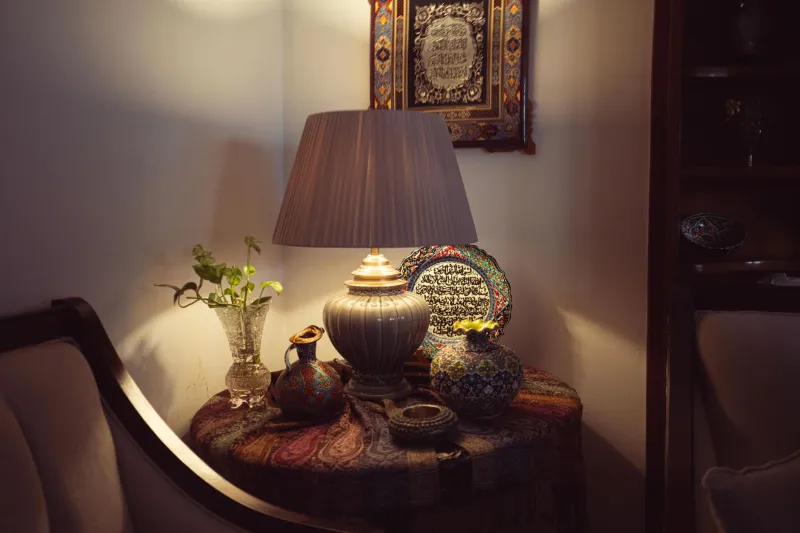
Think about the spaces you've walked into and immediately felt comfortable. Chances are, they weren't showrooms. They were places with a mix of old and new — a grandmother's side table next to a modern lamp, a vintage kilim rug under a very Ikea couch, bookshelves that are clearly more about what the person loves to read than about aesthetic cohesion.
Designers have a term for this: "collected over time." It's considered a desirable quality in high-end interior design. The idea is that a space should look like it evolved organically rather than being purchased all at once from a single catalog. You've been doing that this whole time. You just didn't know it was chic.
That secondhand dresser in your bedroom? Collected. The mismatched dining chairs because you found two at an estate sale and loved them? Intentional eclectic. The gallery wall that's "still in progress"? An evolving installation. You're not behind — you're just telling a longer story.
Your Home Should Grow With You
The deeper issue with the "finished home" ideal is that it assumes you are also finished — that your tastes, your family size, your lifestyle, and your needs are static. They're not. You're not the same person you were five years ago, and your home shouldn't be either.
Allowing your space to evolve is actually a feature, not a bug. The living room that worked for your single-person life probably needs to flex when a partner moves in, or when a baby arrives, or when you finally decide you need a proper home office instead of a laptop on the kitchen counter. A home that's "done" has no room to adapt. A home in progress always does.
There's something genuinely freeing about releasing the idea that your space needs to match a vision you had two years ago on a Sunday afternoon scrolling through Houzz. You're allowed to change your mind. You're allowed to live with something for a while before deciding what you actually want. That's not indecision — that's wisdom.
Some Practical Permission Slips
If you need concrete ways to make peace with your in-progress home, here are a few worth trying:
Stop narrating the apology. When people come over, resist the urge to preemptively explain everything that's not done. Most guests genuinely don't notice, and the ones who do care about your floors more than your company aren't the guests worth impressing.
Finish one thing just for yourself. Not for the 'gram, not for guests — pick one small project that would make you happier every day and do that one. Just the one.
Buy secondhand first. Before you spend full price on something to fill a space, check Facebook Marketplace, thrift stores, or estate sales. You'll spend less, feel less pressure for it to be "perfect," and end up with something with actual character.
Let the space tell you what it needs. Live in a room for a while before decorating it. You'll learn how you actually use it — where you naturally sit, what you reach for, where the light hits — and make much better choices as a result.
The Most Livable Homes Are Never Really Done
The homes people love most — the ones they return to in memory, the ones that made them feel safe and known — were almost never the pristine ones. They were the ones where something was always simmering on the stove, where the couch cushions were permanently dented from years of movie nights, where the walls held a strange and beautiful accumulation of the family's history.
Your home doesn't need to be finished to be full. It just needs to be yours — genuinely, honestly, imperfectly yours.
The half-painted wall can wait. You've got a life to live in here.