Keep the Blurry Ones: Why the 'Ruined' Family Photos Are Actually the Best
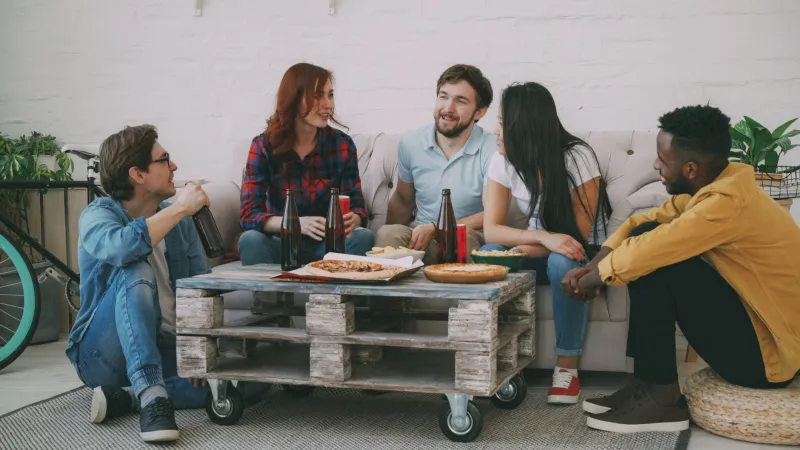
Every family has a version of The Photo Ritual. Someone announces it's time for a group shot. Everyone shuffles into position. There's at least one argument about who's standing where. A toddler refuses to cooperate. Someone blinks at exactly the wrong moment. The dog wanders into the frame. And after eleven attempts, you end up with one technically acceptable image where everybody is more or less facing the camera and nobody looks actively miserable.
That's the one you post. That's the one that gets printed.
But here's the thing — it's probably not the one you'll actually love in twenty years.
The Pressure to Look Perfect (Even on a Tuesday)
Somewhere along the way, we got very serious about family photos. Maybe it was the rise of Instagram, or the explosion of professional family portrait sessions, or just the general cultural pressure to perform happiness for an audience. Whatever the cause, a lot of us have developed this reflex to immediately swipe left on any photo where someone's eyes are half-closed or the framing is slightly off.
We want everyone smiling the same amount. We want good lighting. We want to look like the stock photo version of a family, which is ironic, because stock photos are specifically designed to look like no actual family anywhere.
Psychologists have a term for this: the "ideal self" bias. We consistently prefer images of ourselves that align with who we want to be rather than who we actually are. It's why we'll reject a candid shot where we're laughing too hard — mouth wide open, eyes disappearing — even though the people who love us think that's exactly what we look like when we're happy. We see a flaw. They see us.
What the Imperfect Shot Is Actually Capturing
Let's talk about what's really in those blurry, off-center, somebody-moved photos.
There's motion blur because your nephew was mid-spin, which means he was spinning, which means he was that age, which means he was that kid. There's a closed eye because your mom laughs so hard she squints completely — and if you think about it, you know exactly what that laugh sounds like. There's an unflattering angle because your dad was leaning in to make sure he was in the shot, because he always wants to be in the shot, because he loves his family.
The imperfections aren't noise. They're data. They're the most honest record you'll ever have of what it actually felt like to be in that room, on that day, with those people.
Professional portraits are beautiful, and there's nothing wrong with them. But they capture a moment that was staged. The candid chaos captures a moment that was lived.
The Science of Why We Connect With Real
Research in visual psychology consistently shows that people form stronger emotional connections with authentic imagery than with polished, idealized versions of the same subjects. We're wired to read micro-expressions, body language, and genuine spontaneity as signals of truth. When everything in a photo is arranged and controlled, some part of our brain registers it as a performance.
The slightly blurry shot of your whole family crammed onto one couch, half of them mid-sentence, your grandmother's hand slightly out of frame because she was patting someone's knee — that image fires off recognition in your brain. It feels true. And things that feel true are the things we come back to.
This is why old family photos from the '70s and '80s hit different. Nobody had a ring light. The colors are weird. People are squinting into the sun. And yet those photos are almost universally beloved, because they look exactly like what they were: real people, real moments, real life.
The Delete Button Is a Small Tragedy
We delete too fast. It's one of the quiet losses of the smartphone era — the fact that we now carry the ability to instantly erase any photographic evidence that we are human.
Back when you had a roll of 24 exposures and had to wait a week to see what you got, you kept everything. The blurry ones, the accidental ones, the ones where someone walked through the background. You kept them because film cost money and developing cost more, and also because there was something that felt wrong about throwing away a moment, even an imperfect one.
Now we delete without thinking. We swipe left on the closed eyes before we've even really looked at them. We're so fast to optimize that we don't pause to ask: is this actually a bad photo, or does it just not match the version of us I was hoping to see?
A Small Challenge for Your Camera Roll
Here's something worth trying. Next time you're scrolling through family photos looking for the keepers, slow down before you delete. Look at the ones you'd normally swipe away and ask yourself a few questions:
- Does this show something true about someone I love?
- Would I recognize this moment if I saw it in ten years?
- Is the "flaw" actually just evidence that something was happening?
You don't have to post them. You don't have to print them. But maybe don't delete them either.
Because the photo where your sister is mid-eye-roll and your dad has sauce on his shirt and someone's kid is clearly losing it in the background? That one is a document. That one is proof that you were all there, being yourselves, doing the messy, loud, imperfect work of being a family.
The perfect shot shows the highlight reel. The blurry one shows the life.
Keep the blurry ones.