Open the Junk Drawer: Your Family's Truest Autobiography Is in There
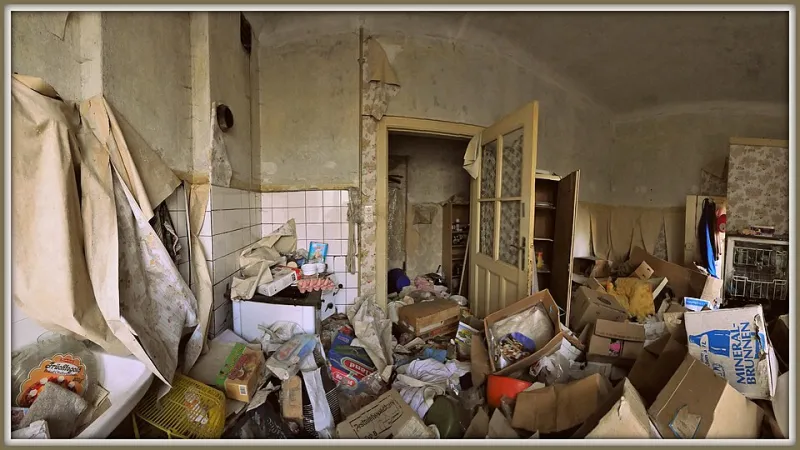
Photo: Rolf Dietrich Brecher from Germany, CC BY 2.0, via Wikimedia Commons
Every American home has one. Not the fancy junk drawer, the staged one in the Pinterest kitchen with dividers and labeled compartments. I mean the real one. The one in your kitchen — probably second drawer down, left of the stove — that resists every attempt at organization and quietly wins every time.
Mine currently contains: eleven batteries of unknown charge, a birthday candle shaped like the number 7 (we have no seven-year-old), three rubber bands, a instruction manual for a blender we donated in 2019, a mystery key, half a deck of cards, a carabiner, and a takeout menu from a Chinese restaurant that closed during the pandemic. I know what you're thinking: clean it out. And I'm here to make the opposite argument.
The Drawer Is a Diary
We're taught to see these drawers as failure zones — evidence of a household that hasn't gotten its act together. Marie Kondo built an empire on the promise that this drawer should spark joy or be gone.
But open it slowly sometime, when the house is quiet, and read it like a document. Because it is one. It's the most honest autobiography your family has ever written, composed entirely by accident.
That stack of takeout menus? A map of every tired Tuesday, every 'nobody's cooking tonight,' every small mercy you granted yourselves. The dead batteries: proof of the flashlight you grabbed during the storm, the toy that kept a kid sane on a road trip until it didn't. The birthday candle for a birthday that already happened: evidence of a party, a cake, a kid now a year older. The mystery key: a door somewhere that your family once walked through.
No photo album is this accurate. Photo albums are curated. The junk drawer is raw footage.
A Tour of America's Failure Zones
The junk drawer has cousins, and they all tell the truth:
The coat closet — where jackets go to hibernate and the board games with missing pieces live. Inside: the rollerblades from the phase, the umbrella you'll need exactly one more time.
The bathroom drawer — hotel shampoos from trips taken years ago, a freebie lip gloss, the hair clip that has outlasted two haircuts.
The garage shelf — the paint can from the color you almost chose, a jar of bolts, the bike pump that works if you hold it right.
The glove box — napkins, ketchup packets, a CD nobody can play anymore but nobody will throw away.
Each of these spaces is a museum of almosts and maybes and not-yets. And that's exactly what makes them precious. The curated parts of our homes show guests who we want to be. The failure zones show who we actually are — a family mid-process, always.
The Case Against the Great Purge
Look, I'm not saying never clean it. There's a difference between an archive and a health code violation. But there's something worth naming about our national allergy to unresolved clutter.
The impulse to organize the drawer is often really an impulse to organize life itself — to declare that everything has a place, a purpose, a label. But real families don't work that way. Real families accumulate. They keep the menu from the closed restaurant because throwing it away means admitting time moved. They keep the odd key because you never know. The drawer holds the loose ends we're not done with yet, and honestly, we're all mostly loose ends.
When my grandmother passed, we spent weeks sorting the curated parts of her house — the good china, the labeled linens. But the moment that undid all of us was her junk drawer: a movie stub, a fortune cookie slip reading 'you already know the answer,' a crayon worn down to a nub. Fifteen seconds of contents, and suddenly she was right there. Not the grandmother of the photo albums. The real one.
Go Open Yours
So here's your gentle nudge: sometime this week, pull that drawer open and don't clean it. Read it.
Find the oldest thing in there and try to remember its story. Find the strangest thing and ask who it belonged to. Find the thing you keep for no reason and notice that you keep it anyway — that's love, or habit, and after enough years those are the same thing.
Then, if you want, take a picture. Not for Instagram. For the archive. Because someday that drawer will be the most honest thing anyone leaves behind: a small, jumbled, unsorted record of a family that was busy living and never got around to being tidy about it.
The junk drawer isn't where organization goes to die. It's where real life goes to be remembered. Long live the mystery key.