Proof That Nobody's Proofreading: The Beautiful Chaos of Typos That Actually Brought People Closer
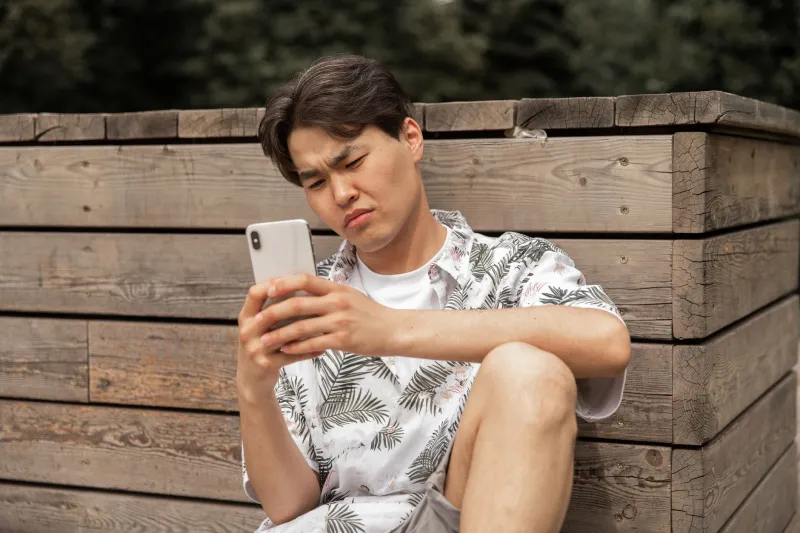
Let's be honest. You've re-read a text you just sent, spotted the typo immediately, and felt that specific, stomach-dropping horror that no other life experience quite replicates. Maybe you told your coworker you'd "be there in a sex" instead of "sec." Maybe you emailed your kid's teacher a heartfelt note that ended with "Warm retards" because autocorrect had opinions. Maybe you sent a job application addressed to "Dear Hiring Manger" and only noticed after you hit send.
Here's the thing, though: those moments? They're the ones people remember. Not the polished stuff. Not the perfectly worded birthday card or the flawless presentation. The typo. The glitch. The very human fumble that proved, beyond any reasonable doubt, that you are a real person and not a carefully curated highlight reel.
And somehow — almost every single time — something unexpectedly good comes out of it.
Your Brain Is Wired to Love the Awkward Stuff
There's actually some science behind why our blunders stick around in our memories (and everyone else's) so much longer than our victories. Psychologists call it the von Restorff effect — the idea that unusual, unexpected events are encoded more deeply in memory than routine ones. A perfectly written email disappears into the inbox void. An email that accidentally signs off with "Lots of love, Karen" to a client you've met exactly once? That lives forever.
Beyond memory, there's what researchers call the pratfall effect, first documented by psychologist Elliot Aronson in the 1960s. His finding was surprisingly simple: competent people become more likable when they make a mistake. Not less. The stumble humanizes them. It cracks the professional veneer just enough to let real connection slip through.
So when you cringe at that typo, your nervous system is telling you one story. But the people on the receiving end? They're often getting an entirely different one — one where you just got a whole lot more relatable.
The Texts That Accidentally Started Something Real
Jamie, a 34-year-old project manager from Columbus, Ohio, still laughs about the message that accidentally launched her closest friendship. She meant to text her new coworker, "Hey, want to grab lunch?" What her phone sent was, "Hey, want to grab launch?"
Her coworker texted back: "I've been trying to grab launch my whole career. Still working on it."
That was three years ago. They've been inseparable ever since.
"It was such a dumb thing," Jamie says, "but it immediately made us both feel like actual humans instead of just work people. We weren't performing anymore after that."
That's the thing about a typo. It demolishes the performance. You can't maintain a carefully constructed image when your phone just told someone you want to "meat" them for coffee.
When the Mistake Becomes the Story
Ask anyone about their most memorable family moments and watch what happens. They don't reach for the perfectly executed Thanksgiving dinner. They reach for the year someone mixed up sugar and salt in the pie, or the Christmas card that went out to 60 relatives with a glaring spelling mistake that nobody caught until December 26th.
Mark, a dad of three from Nashville, printed 200 holiday cards one year with the family name misspelled — his own family name, which he has been writing for 41 years. The card read "Happy Holidays from the Hendorson Family."
"My mother-in-law still has it framed," he says, completely deadpan. "I think she genuinely prefers it to the real ones."
This is the paradox of perfection: we work so hard to produce something flawless, and the flawless version gets recycled. The imperfect one gets framed.
The Autocorrect Hall of Fame Nobody Asked For
Autocorrect deserves its own category in the typo universe because it operates with a particular kind of chaotic confidence. It doesn't just let you make mistakes — it aggressively invents them on your behalf, with zero apology.
A few real submissions from people in our community:
- "I texted my mom that I was 'bringing a friend home for Thanksgetting.' She now calls Thanksgiving 'Thanksgetting' every single year. The whole family does. It's been six years."
- "Replied to my boss's 'Great work today!' with 'Thanks, you too, daddy.' I wanted to evaporate. He laughed so hard he cried. We still talk about it."
- "My autocorrect changed 'I'll be there at 7' to 'I'll be there at Satan.' My grandmother thought it was the funniest thing that had ever happened in the history of time."
Every single one of these stories is told with warmth. Every single one of them made something stronger — a relationship, a tradition, an inside joke that will outlast the embarrassment by decades.
Why Polished Doesn't Land the Same Way
We spend enormous energy trying to communicate perfectly. We rewrite texts. We draft and redraft emails. We proofread. And there's nothing wrong with caring about clarity. But somewhere in the pursuit of the perfect message, we sometimes scrub out the most important ingredient: ourselves.
A typo is, at its core, evidence that a human being was in a hurry, or distracted, or laughing too hard to notice, or just being a regular, imperfect person firing off a message in the middle of real life. And real life is exactly what people connect with.
The polished version says: I am competent and put-together.
The typo says: I am here, fully present, and I'm kind of a mess sometimes — just like you.
Guess which one people respond to.
Making Peace with the Misfire
If you're someone who replays every typo-related cringe moment at 2 a.m. — and let's be real, most of us are — here's a reframe worth trying.
That mistake you made? It's already a story. The only question is whether you're going to let yourself laugh at it or keep white-knuckling the embarrassment. The people who tend to have the richest, most connected relationships are often the ones who've learned to narrate their own fumbles with a little affection. They're not dismissing accountability or lowering their standards — they're just refusing to let a typo define their worth.
Because here's the quiet truth at the center of all of this: the moments that bring us closest to each other are almost never the ones we planned. They're the accidents. The wrong words. The autocorrect disasters. The emails sent too fast.
They're proof that you showed up, imperfections included — and that, it turns out, is exactly enough.
Got a typo story that ended better than expected? We want to hear it. Drop it in the comments — the more mortifying, the better.