You Optimized Everything and Still Feel Like Garbage — Here's Why
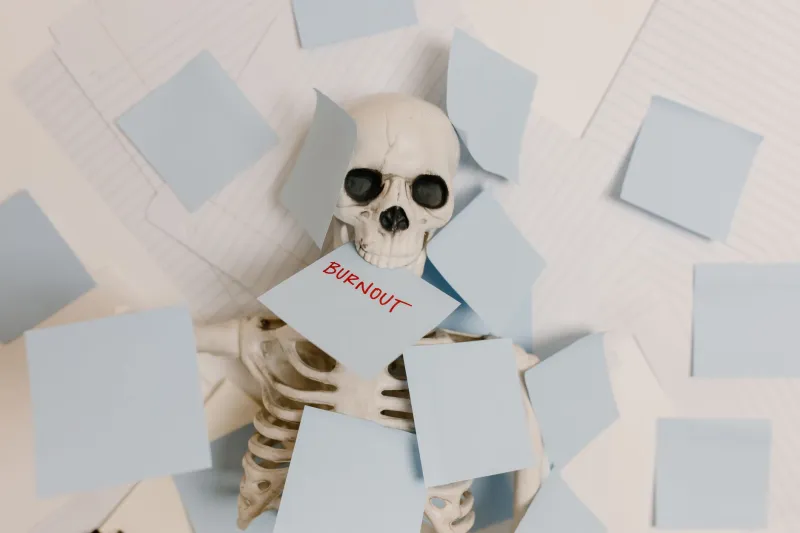
Somewhere between your second productivity podcast and your third attempt at a morning routine that involves journaling, cold water, and seventeen minutes of intentional silence, something quietly broke. Not dramatically. Not in a way you could point to and say, there — that's the moment. It just sort of... deflated. Like a balloon that didn't pop, it just slowly lost its shape over weeks of ruthless scheduling and color-coded to-do lists.
Welcome to the productivity trap. Population: a whole lot of us.
The Hustle Gospel and How We Got Here
America has always had a complicated romance with hard work. But somewhere in the last decade or so, "working hard" morphed into something weirder and more demanding — optimizing your entire existence. Suddenly it wasn't enough to get things done. You had to get things done in the most efficient, data-driven, habit-stacked way possible.
We started treating our lives like software that needed constant updating. Sleep became something to "hack." Meals became "fuel." Leisure — actual, unstructured leisure — became suspicious, something you had to justify with terms like "active recovery" or "strategic rest" before it felt acceptable.
The self-help industry exploded. Apps multiplied. Influencers built entire platforms around 5 a.m. wake-ups and Pomodoro timers and the right kind of planner. And millions of people, genuinely trying to build better lives, bought in completely.
Here's the thing though: a lot of those people are exhausted and quietly miserable, and they can't figure out why — because technically, they're doing everything right.
Efficiency Is a Tool, Not a Lifestyle
There's nothing inherently wrong with being organized. Batch cooking on Sundays is genuinely useful. A good calendar system can reduce stress. Nobody is arguing that chaos is superior to having a rough plan for your week.
But there's a massive difference between using efficiency as a tool and turning it into the entire operating philosophy of your life.
When optimization becomes the goal rather than the means, you stop asking "what do I actually want?" and start asking "what's the most productive use of this time?" Those questions sound similar but they lead to completely different places. One leads to a life. The other leads to a very well-managed schedule that somehow never feels full.
Because here's what the productivity content never really mentions: a lot of the best stuff in life is profoundly inefficient. Long dinners that stretch past 10 p.m. for no reason. Road trips where you take the wrong exit and end up somewhere unexpected and kind of great. Conversations that wander so far from where they started that you forget what you were originally talking about. Afternoons where you meant to be productive and instead ended up reading half a novel and staring out the window for a while.
None of that would survive a time audit. All of it is irreplaceable.
What We're Actually Losing
Researchers who study creativity and psychological wellbeing keep bumping into the same uncomfortable truth: unstructured time isn't wasted time. It's actually where a lot of the most important mental work happens — the kind you can't schedule.
When your brain isn't being directed toward a task, it shifts into what neuroscientists call the default mode network. This is where you daydream, process emotions, make unexpected connections between ideas, and essentially figure out who you are and what you think about things. It's not nothing. It might actually be everything.
But if every spare moment gets filled — podcasts during the commute, a self-improvement video while you eat lunch, a language learning app before bed — you're essentially never giving your brain the downtime it needs to do that deeper work. You're constantly inputting and never processing.
No wonder so many people feel simultaneously overstimulated and creatively empty. We've optimized the wandering right out of our days.
The Weird Freedom of Wasting Time on Purpose
This is where it gets a little counterintuitive, so stay with me.
What if you deliberately built some inefficiency back into your life? Not as a productivity strategy (though the irony of that is not lost), but as a genuine act of rebellion against the idea that every moment needs to be accounted for.
Take the long way home sometimes. Cook a recipe that takes twice as long and makes a complete mess of your kitchen. Read something you'll never be able to put on a resume. Sit in a coffee shop and watch people walk by and think about nothing in particular. Call a friend and talk for an hour about something completely inconsequential.
Notice what happens. Not in a journaled, tracked, measurable way — just notice. Does something loosen a little? Does something that felt far away start feeling closer?
A lot of people who've stepped back from the optimization obsession describe it the same way: they started feeling like themselves again. Not a more productive version of themselves. Just themselves.
Messy Time Is Real Time
There's a reason this site exists. Not because mess is aspirational or because falling apart is something to celebrate for its own sake, but because real life — the actual texture of a human life being lived — is inherently imperfect, inefficient, and wonderfully hard to optimize.
The moments that tend to matter most rarely show up in the time-blocked calendar. They happen in the gaps, in the accidental afternoons, in the conversations that ran long, in the projects you abandoned halfway through because something better came along, in the quiet Tuesday evenings when nothing in particular happened and somehow you felt completely at peace.
You can't schedule those. You can only make enough room for them to show up.
Letting the System Be a Little Broken
You don't have to throw out your planner or delete your habit-tracking app. This isn't a manifesto against having your act together. It's just a gentle nudge to question whether "having your act together" has quietly become more important than actually enjoying the show.
Maybe the goal isn't a perfectly optimized life. Maybe it's a life that has enough breathing room to surprise you. Enough slowness to let you actually taste it. Enough imperfection to remind you that you're a person, not a productivity system.
That's a harder thing to measure. It won't fit neatly into a dashboard or a quarterly review. But it might be the thing that, when you look back, actually felt like living.
And honestly? That's probably worth a little inefficiency.