You Don't Have to Have It Together to Be on the Right Path
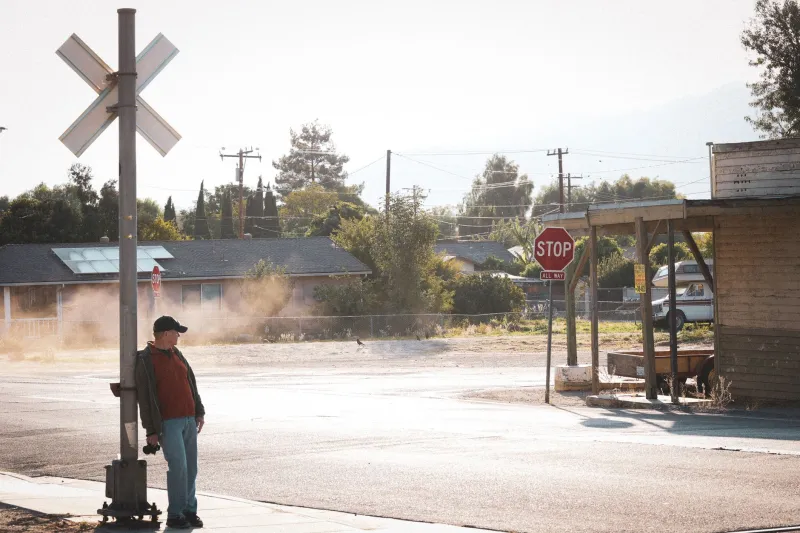
Somewhere between handing in your notice at the job that no longer fit and actually landing steady footing in your new direction, there's this stretch of time that nobody really prepares you for. You're not the person you used to be professionally, but you're not quite the new version of yourself yet either. You're in the middle. And the middle is weird.
It's the part where you Google things you feel like you should already know. Where you sit in meetings and wonder if everyone else can tell you're improvising. Where your LinkedIn still says one thing and your actual daily life says something completely different. It's the part where imposter syndrome doesn't just knock — it moves in, puts its feet on your coffee table, and helps itself to your snacks.
Here's the thing nobody says out loud enough: that messy middle? It might actually be your best era.
The Doubt Is Data, Not a Diagnosis
When you're mid-pivot and the uncertainty feels suffocating, it's easy to read all that doubt as a sign you made the wrong call. But doubt during a career transition isn't a red flag — it's just your nervous system doing its job. You're doing something genuinely hard. Of course it doesn't feel smooth.
Think about it this way: if you were completely comfortable, completely confident, and never second-guessing yourself, you probably wouldn't be growing at all. The discomfort you're feeling right now is the gap between your current skills and the ones you're building. That gap is not a flaw in the plan. That gap is the plan.
The people who've made big professional pivots and come out the other side will almost universally tell you the same thing — the in-between period was where they learned the most about themselves. Not the triumphant arrival. The messy, doubt-filled commute to get there.
Skill Gaps Are Just Unfinished Rooms
Here's a reframe worth sitting with: every skill gap you have right now is just a room in your professional house that hasn't been furnished yet. The walls are up. The foundation is solid. You just haven't moved anything in yet.
When you're new to a field or role, you don't have years of ingrained habits telling you there's only one way to do something. You bring in fresh eyes, weird combinations of experience from your previous life, and a genuine curiosity that people who've been in the industry for decades sometimes lose. That's not a liability. That's actually kind of rare.
Some of the most creative problem-solvers in any industry are the ones who came from somewhere else entirely. The teacher who became a UX designer. The nurse who pivoted into healthcare tech. The marketing manager who went back to school for social work. Their "gaps" gave them angles that career-lifers simply didn't have.
You're not behind. You're just coming at it differently.
The Vulnerability That Opens Doors
One of the quieter gifts of being mid-career-change is that you have permission — maybe for the first time in a long time — to just say I don't know yet. And that admission, as uncomfortable as it feels, has a way of connecting you to people in ways that polished confidence rarely does.
When you're willing to be genuinely new at something, you become approachable. Mentors show up. Colleagues who remember what it felt like to start over lean in. People who've been waiting for someone to just be honest about the learning curve suddenly have something real to talk to you about.
There's an authenticity that radiates off someone who's actively figuring something out — who isn't performing expertise they don't have yet. In a professional world full of people trying to seem like they've arrived, showing up as someone genuinely in progress is quietly magnetic.
This is where real mentorship gets built. Not in formal programs or networking events where everyone's swapping elevator pitches. It's in the honest conversations that start with hey, I'm still learning this — and mean it.
No Reputation, No Problem
There's actually a freedom in being unknown in a new space that you might not fully appreciate until it's gone. Right now, you don't have years of professional reputation to protect in this new field. Nobody has expectations of you yet. That means you can experiment, ask the dumb questions, try the weird approach, and fail at things without it becoming part of your permanent professional story.
That's not a small thing. Established professionals sometimes can't take certain risks because they have too much to lose. You, in your scrappy mid-transition season, have the rare gift of low stakes. Use it. Try the thing. Pitch the idea. Take the class that feels too basic. Raise your hand for the project nobody else wants.
The messy middle is actually one of the best times to take swings, because the pressure to perform perfectly hasn't fully settled in yet.
Letting Go of the Timeline You Made Up
Somewhere along the way, most of us absorbed this idea that career transitions are supposed to follow a clean arc. You decide to change, you make the change, you land somewhere great, and the whole thing wraps up in a reasonable amount of time. Cue the inspiring Instagram post about following your dreams.
Real life is a lot less tidy. Some pivots take years. Some involve detours that look, from the outside, like setbacks but are actually crucial chapters. Some require you to hold two identities at once — the person you were and the person you're becoming — for longer than feels comfortable.
The timeline you made up in your head isn't a contract. It's a rough sketch at best. Giving yourself permission to let it be messier, longer, and less linear than you planned isn't giving up. It's actually the most honest thing you can do.
You're Allowed to Be Mid-Story
We have this cultural obsession with the finished version of things. The success story. The pivot that worked out. The before-and-after. But the richest part of any transformation is almost always the murky middle — the part that doesn't photograph well and doesn't fit neatly into a LinkedIn headline.
If you're in the middle of a career change right now and you feel confused, underprepared, or like you're somehow doing it wrong — you're probably doing it exactly right. The doubt means you care. The discomfort means you're stretching. The fact that you haven't figured it all out yet means the story isn't over.
You don't have to have it together to be on the right path. Sometimes the right path is the one that looks, from the outside, like you're still finding your way.
Because you are. And that's not a problem. That's just the honest, beautifully unfiltered truth of becoming someone new.