Family Game Night Is a Disaster and That's Exactly Why We Keep Doing It
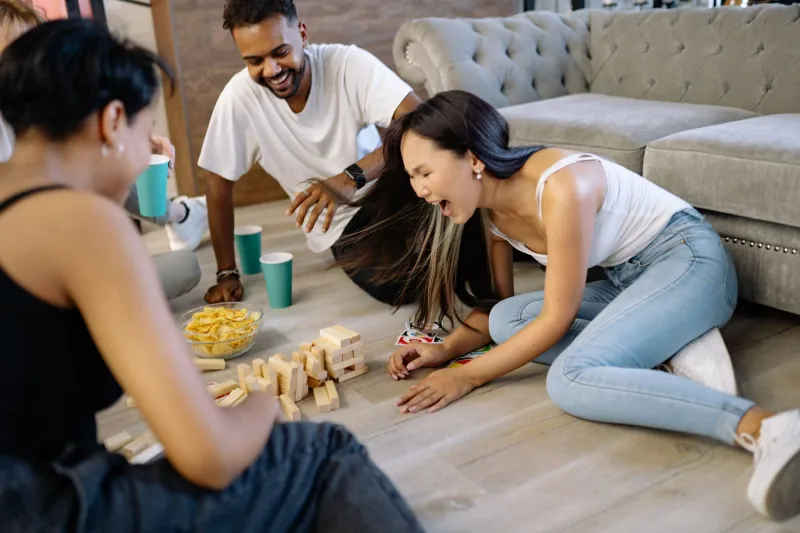
Last Friday, my youngest accused my husband of cheating at Uno. My husband — a grown adult man — got genuinely defensive about it. My older kid quit halfway through because she decided the rules were "unfair" and retreated to her room. I found a rogue Monopoly hotel piece in my sock later that night. We had a great time.
Family game night has this reputation in TV commercials and Pinterest boards of being this warm, glowy, perfectly orchestrated event where everyone laughs at the right moments and nobody cries over a bad dice roll. That version of game night does not exist in our house. Maybe it doesn't exist in yours either. And honestly? That's kind of the whole point.
Why We Even Started Doing It
We fell into family game night the way most families do — sort of by accident. A rainy Saturday, nothing on TV that everyone could agree on, a dusty stack of board games in the closet. Someone pulled out a box, someone else complained about it, and then two hours passed and nobody had looked at their phone.
That was enough. We made it a weekly thing. Not a fancy, scheduled, color-coded-on-the-family-calendar thing. Just a "hey, it's Friday, you want to play something?" thing. Low stakes. Low expectations. High chaos.
And here's what I've noticed over the years: the messier the game night, the more we talk about it afterward. The clean, easy nights where everyone was polite and the game wrapped up neatly? Forgotten. The night my son dramatically slammed his hand on the table and sent all the Jenga blocks flying? That's a family legend now.
The Actual Games We Play (And the Chaos Each One Brings)
Every family has their roster, and ours is a mix of classics and complete chaos-generators.
Uno is basically a controlled family argument. Someone plays a Draw Four at the worst possible moment, someone else questions whether that was legal, and suddenly everyone's a rules lawyer. We love it.
Scrabble reveals that every single person in our family thinks they're smarter than they actually are. My husband once tried to convince us "zax" was a word. (It is. We didn't believe him. He was insufferable about it.)
Codenames is the one that really shows you how your family's brain works — and how differently everyone thinks. It's equal parts fascinating and maddening.
Sorry! lives up to its name in the most passive-aggressive way possible. Nobody is actually sorry. Not even a little.
And then there are the party-style games — things like Telestrations, Exploding Kittens, or Wavelength — that basically guarantee someone is going to laugh so hard they snort. Those are the nights I live for.
What Nobody Tells You About the Real Benefits
Yeah, there are studies. Screen time goes down, family bonding goes up, kids develop strategic thinking, blah blah blah. All true, probably. But here's the real stuff nobody puts in the parenting articles:
You learn how your kids handle losing. And then you get to actually help them with it — not in a lecture-y way, but in a "hey, I also just lost and I'm annoyed about it too" way. That's real emotional modeling right there.
You find out what makes each person tick. My daughter is a long-game strategist. My son is chaotic and impulsive and somehow wins anyway. My husband folds under pressure. I get weirdly competitive about word games. Game night is basically a personality test that also involves snacks.
You create shorthand. Inside jokes, recurring bits, the phrases that only make sense to your family. "You pulled a Dad" now means making an overconfident move that completely backfires. That kind of stuff is the connective tissue of a family.
It gives everyone a reason to be in the same room. Teenagers especially. You can't force connection, but you can put a game on the table and let it happen organically.
Tips for Making It Actually Happen (Without Making It a Whole Thing)
The biggest enemy of family game night isn't conflict or bad sportsmanship. It's inertia. Here's how to keep it going without turning it into a production:
Keep the games accessible. Don't bury them in a closet behind the holiday decorations. A visible shelf or basket means lower activation energy to actually start playing.
Let different people pick the game. Rotate who's in charge of choosing. Yes, this means you will occasionally have to sit through a game you hate. That's part of it.
Don't force it to be long. Some nights you have time for a full Catan session. Some nights it's a quick round of Sushi Go! before everyone melts. Both count.
Ditch the phones. This one matters more than any other tip. Phones off, face down, or in another room entirely. The difference is real.
Feed people. Snacks are not optional. Snacks are infrastructure.
Let it be imperfect. Someone will quit early. Someone will be a sore loser. Someone will knock the board. It's fine. It's actually better than fine — it's the stuff you'll remember.
The Mess Is the Memory
I've been thinking lately about what my kids are going to remember from their childhood. Not the perfectly planned vacations (though those matter too). Not the clean, orderly dinners. The stuff that sticks is the weird, specific, chaotic stuff. The Friday nights where we stayed up too late arguing about whether a word counts in Scrabble. The time the dog knocked over the game board and we had to reconstruct the whole thing from memory. The year my son got SO into Ticket to Ride that he started watching strategy videos online and then absolutely destroyed all of us.
Family game night doesn't have to look like a stock photo. It doesn't have to be peaceful or perfectly fair or end with everyone hugging. It just has to happen. Regularly. Imperfectly. With snacks.
That's the whole secret. Show up, play the game, let it be messy, and do it again next week.
We're already arguing about what to play this Friday. It's going to be a disaster. I genuinely cannot wait.